

how to cook korean rice cake
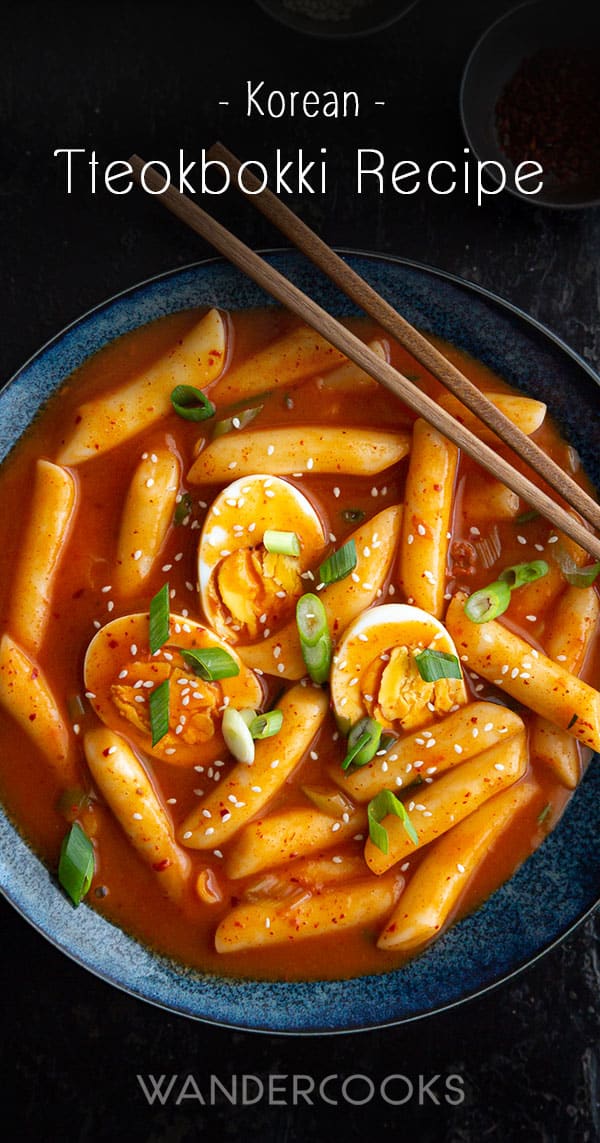
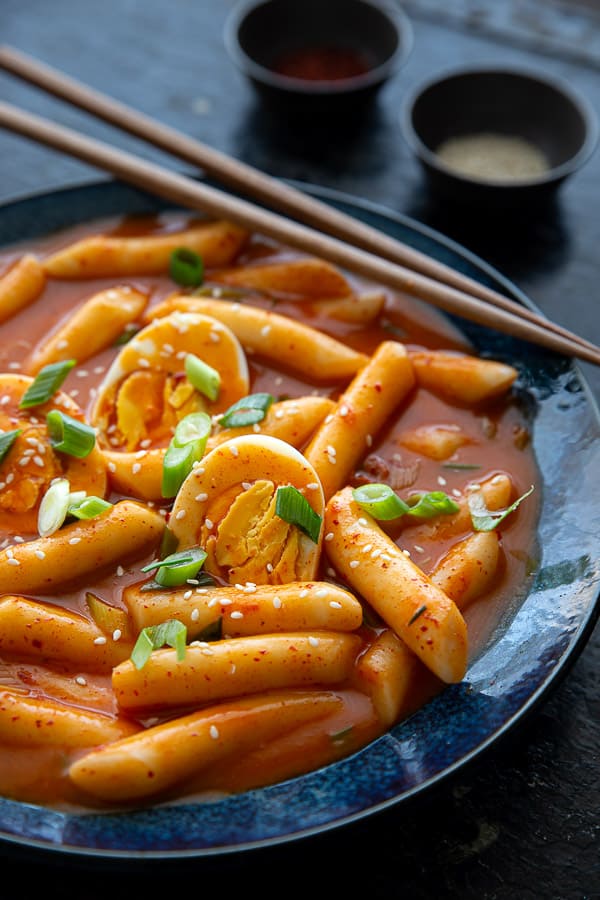
This fiery Korean Tteokbokki recipe features a quick and easy sauce base you can make in less than 10 minutes! We'll simmer chewy cakes in a spicy sauce of gochujang and dashi stock in delicious and satisfying homemade street food recipe.
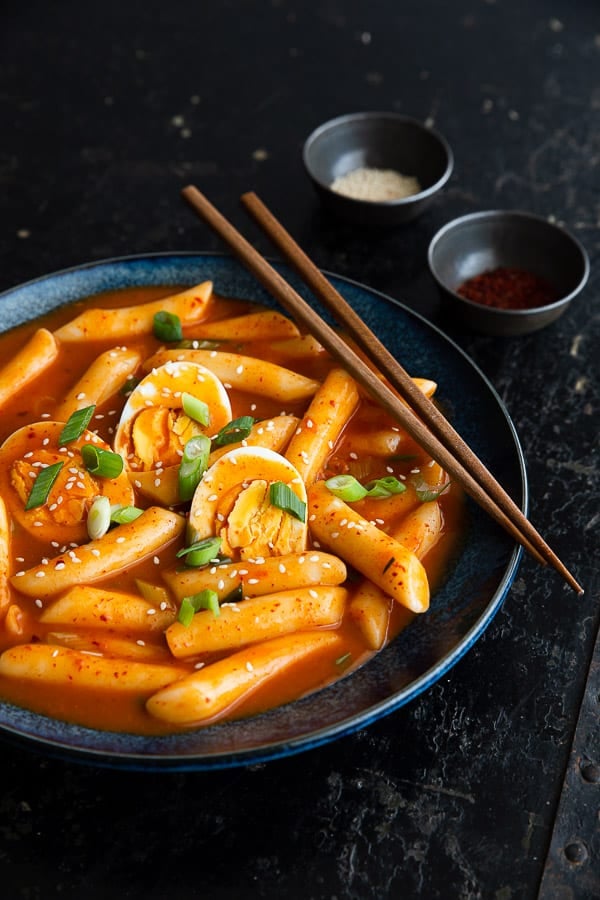
Why We Love This
Tteokbokki is surprisingly easy to make at home. The stock base is made from powdered dashi stock (rather than homemade dashi), so you can make it in minutes.
It has a distinctive flavour and spicy kick from classic Korean ingredients like gochugaru (Korean chilli flakes) and gochujang paste. It's also easy to modify the recipe to suit your taste preferences, or add extra ingredients to make it go even further.
P.S. If you're looking for a non spicy version, why not try gungjung tteokbokki rice cake stir fry!
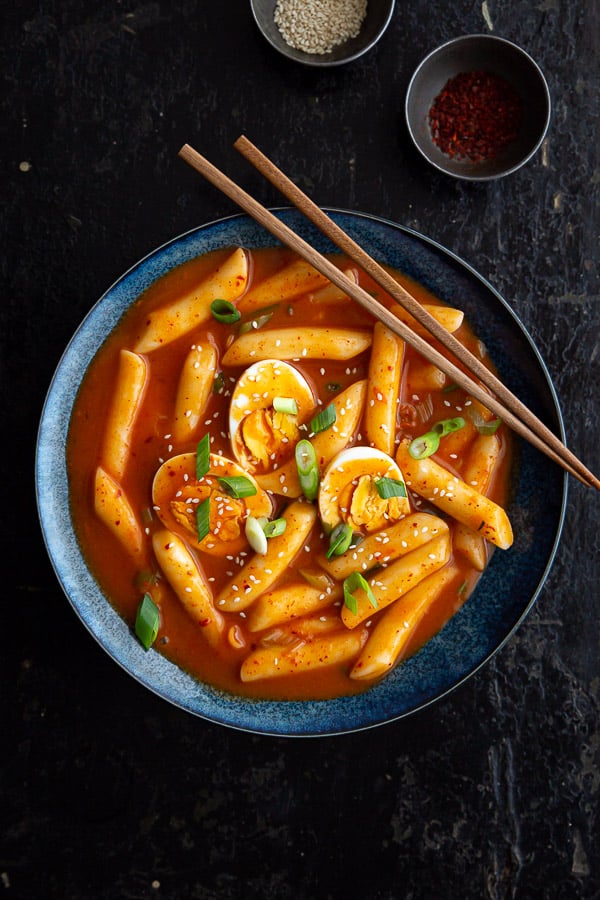
What is Korean Tteokbokki?
Tteokbokki (sometimes romanised as dukbokki) is a popular street food dish in Korea. It's a spicy dish of chewy rice cakes stir fried in a thick chilli sauce made from a base of seaweed and/or fish stock and gochujang chilli paste.
You'll usually find it at bunsikjip (snack bars) orpojangmacha (street stalls) where it's stir fried in big batches and served with eomuk fish cakes, scallions/green onions and boiled eggs. If you're fortunate enough to try some in Korea, it's cheap, flavourful and filling, perfect as a spicy snack or lunch while exploring the city.
While you could make your own fish stock base, we recommend using powdered stock (known as yuksu in Korean or dashi in Japanese). It saves time, tastes just as good, and transforms this dish into an easy weeknight meal!
Where We Learned This Recipe
We first came across this fiery dish while roaming the streets of Nampodong in Busan, South Korea. This place is MADE for food lovers – you can literally spend hours here just wandering and eating and shopping. So, naturally, it was an irresistible lure for two hungry Wandercooks!
We knew the minute we found the tteokbokki hot spot. A warm, spicy aroma filled the air as vendor after vendor worked at massive hot plates, stir frying long cylindrical rice cakes in the rich, red tteokbokki sauce. Some vendors served theirs with boiled eggs thrown into the mix, others with green onions, slices of eomuk fish cakes and seafood.
What You'll Need
We'e listed the essential ingredients, how to find them, and their substitutes below. You'll also need a couple of basic staples including soy sauce, raw sugar and sesame oil, plus some boiled eggs and green onions to serve (optional).
- Tteok / Rice Cakes – You can use the long cylinder-shaped rice cakes known as garae-tteok, or flat rice cakes sliced diagonally. It's more common to use the cylinders, but the flat rice cakes will taste just as good. The best place to look for them is the fridge or freezer section of Korean convenience stores or Asian groceries, but you can also find them dried. Dried rice cakes will need to be soaked for around 3 hours (or overnight) before using.
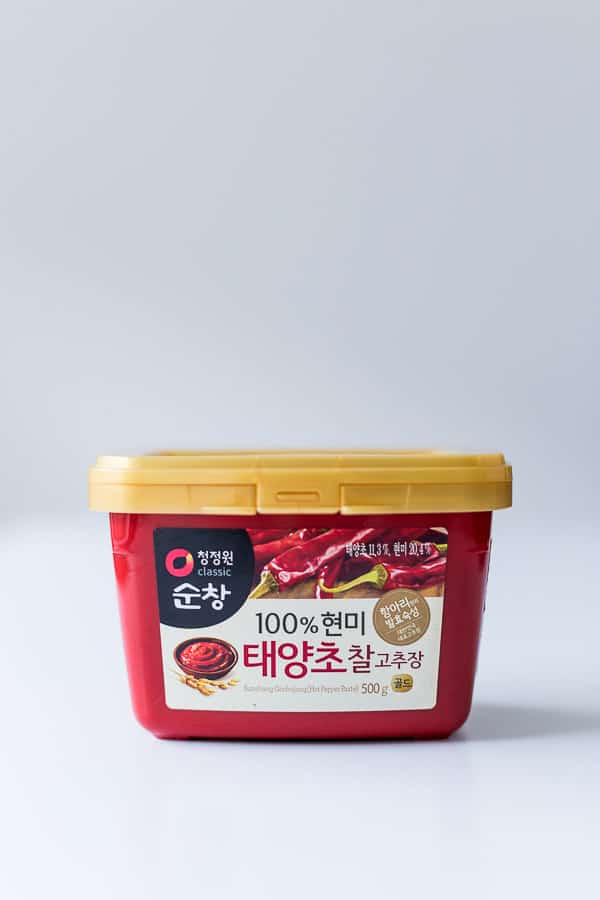
- Gochujang – One of the key ingredients to the dish, find out more about it in our gochugang guide. Regular gochujang has more of a tomato / sweet taste than chilli heat, although you can buy an extra hot version if you prefer. We've found these at regular supermarkets, Asian groceries or online. Note that the level of heat can vary depending on the style or brand of gochujang that you buy. If you're unsure, start with a small amount and build it up from there. If you can't source gochujang, you can substitute (per tbsp) with 1 tbsp of red pepper flakes blended with 2 tsp of soy sauce and a pinch of sugar. The flavour won't be as complex, but it should get you through.
- Gochugaru / Korean Red Pepper Flakes – Find it at Asian grocers and online, where it may also be labelled as hot pepper powder. These seem to have more flavour and less heat than regular chilli flakes. To substitute, use half the amount of cayenne pepper or regular chilli powder.
- Dashi Stock – this gives the unique umami flavour to the dish. There are two styles you can use as the base for this recipe: 1) Konbu dashi – less intense seaweed based flavour. OR 2) Katsuo dashi – intense anchovy kick. For the best flavour we recommend the stronger anchovy version. The smell is strong while cooking, but doesn't taste "fishy" in the final dish – instead it gives the dish a mouth-watering umami kick. Feel free to choose the right style for your tastes, or substitute with vegetable or chicken stock if you prefer.
How to Make Tteokbokki:
-

1. -

2. -
3.
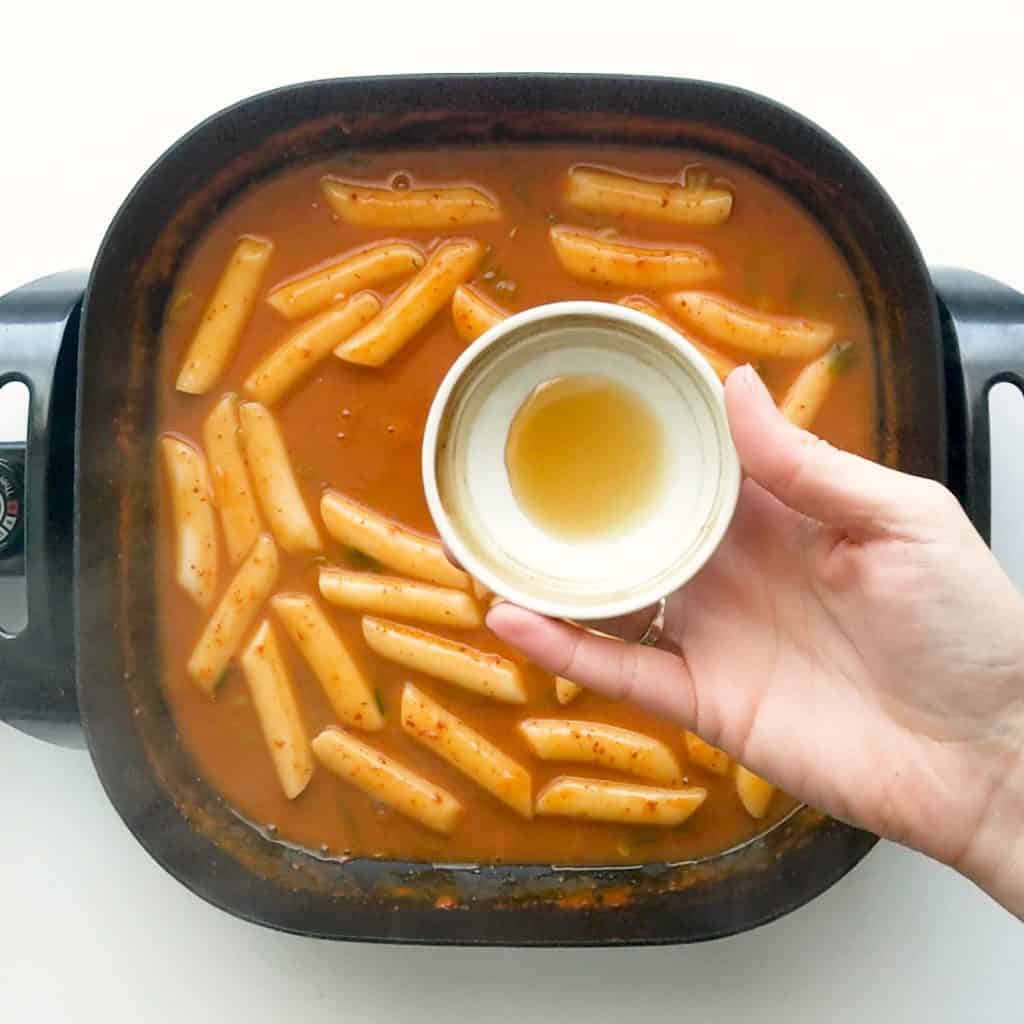
- Add water dashi stock powder to a wok or large frypan and bring to the boil. Add in the gochujang paste, red chilli flakes, sugar and soy sauce and stir into a luscious, fragrant soup.
- Pop in the rice cakes and green onion and bring back to the boil, then simmer for around 10 minutes until the rice cakes have softened, stirring frequently so they don't stick to the bottom. You'll know it's done when the sauce becomes thick and glossy and the rice cakes are nicely chewy (go on, test one, you know you want to!). If the rice cakes aren't soft enough, add in a little more water and continue to cook until ready.
- Just before serving, pour in the sesame oil and give it a good stir. Garnish with more sliced green onion, then serve piping hot and delicious!
Wandercook's Tips
- If your rice cakes are frozen, soak them in boiling water for a few minutes before cooking to defrost. Dried rice cakes will need to be soaked for a minimum of 3 hours or overnight, or you can speed up the process by soaking in boiling water for 10-20 minutes before cooking.
- Have leftover gochujang? There's plenty of delicious ways to use it up!
FAQs
How spicy is Tteokbokki?
Traditionally tteokbokki is quite a spicy dish! We've toned our recipe down slightly, but if you need to reduce the spice even further you can cut back on the chilli flakes and/or gochujang.
How can I make the sauce nice and thick?
The trick is to cook the sauce on low to medium heat and be patient! If it's still not thickening up, try adding a cornflour slurry of 1 tsp cornflour to 2 tsp cold water and mix it through.
How should I reheat tteokbokki?
The best way to reheat tteokbokki is in a pan or wok on the stove rather than in the microwave. Add a little extra water or stock and stir gently over low heat until warmed through. This will help stop the rice cakes becoming too mushy.
Variations & Substitutes
- Make Rabokki – Add ramen noodles or instant noodles.
- Protein – Try it with chicken, thinly sliced pork, seafood (shrimp, squid, fish cakes), or spam sausages similar to Korean Army Stew.
- Cheese – Sprinkle with cheddar or top with cheese slices and bake or broil for a minute or two until the cheese is melted.
- Veggies – Add chopped cabbage, bok choy, broccolini, red bell pepper / capsicum or kimchi.
Looking for more flavour packed Korean recipes? Here are our favourites:
-
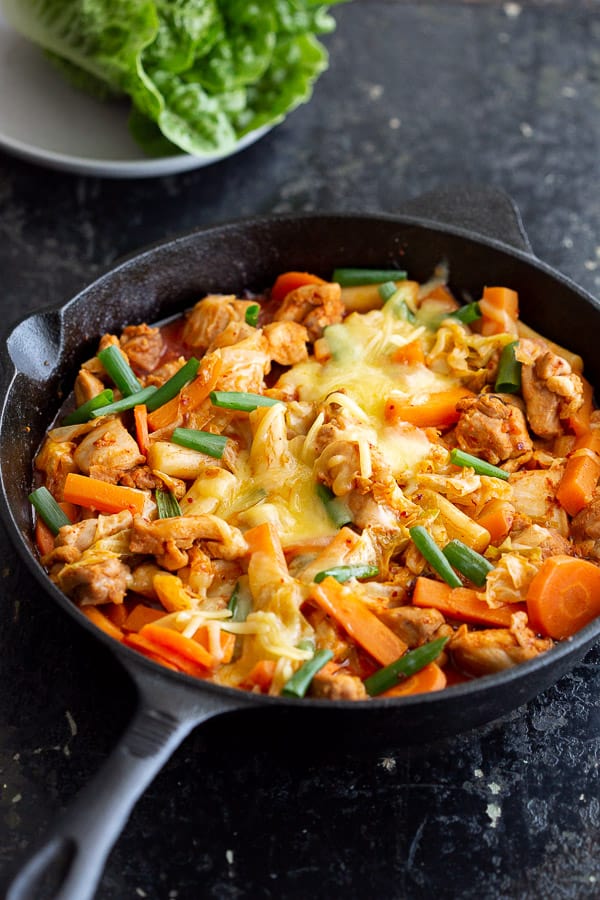
Dakgalbi with Cheese – Korean Spicy Chicken Stir Fry -
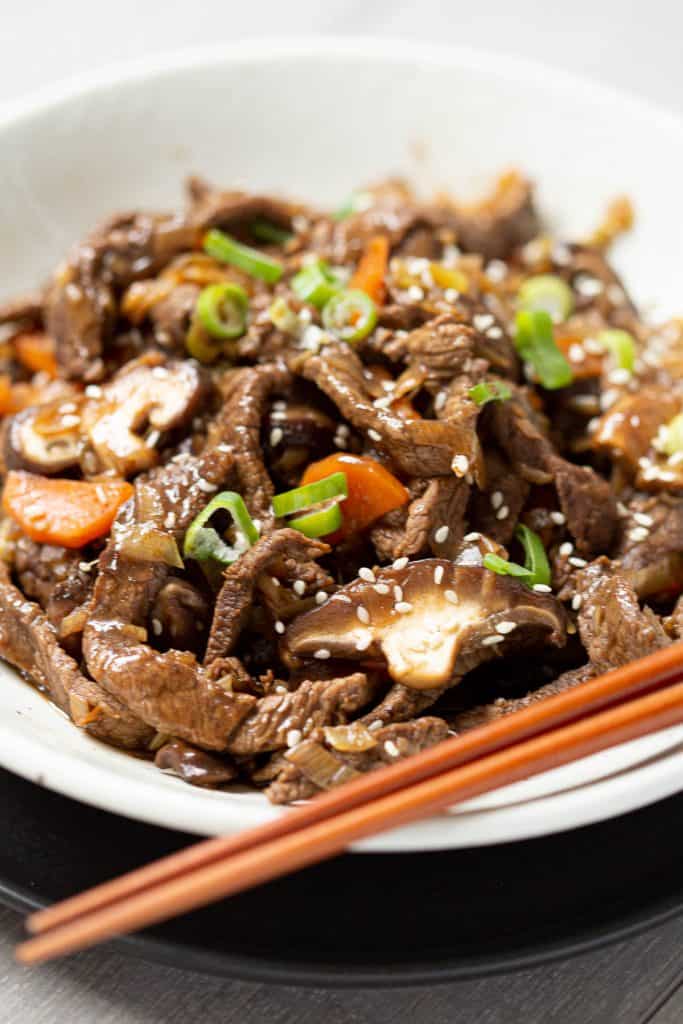
Bulgogi – Korean BBQ Beef with Shiitake Mushroom -
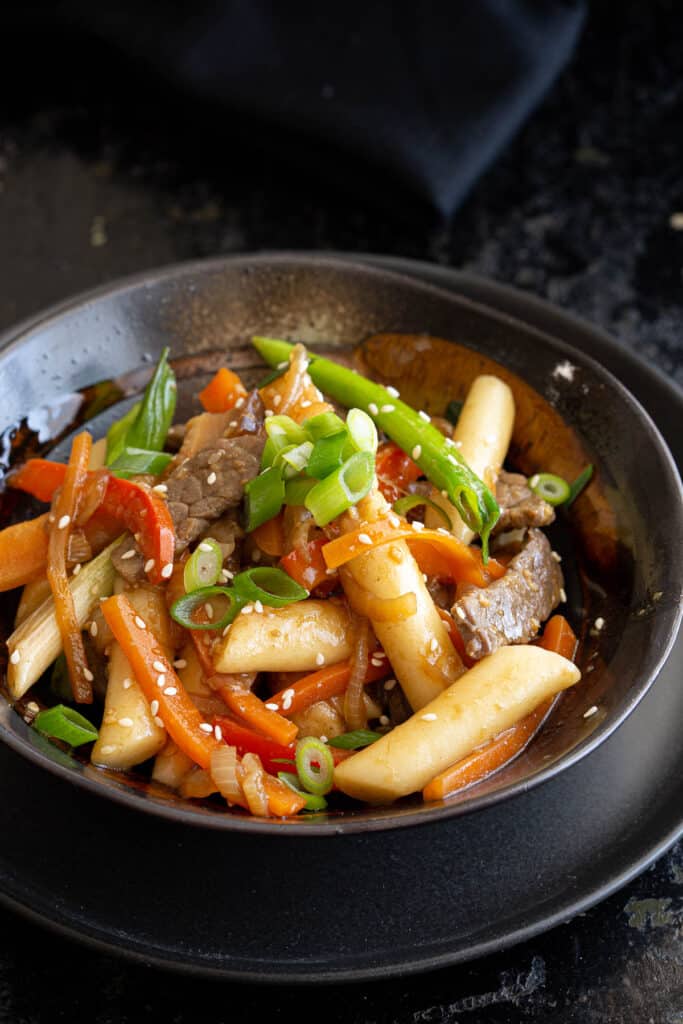
Gungjung Tteokbokki – Korean Royal Court Rice Cakes -
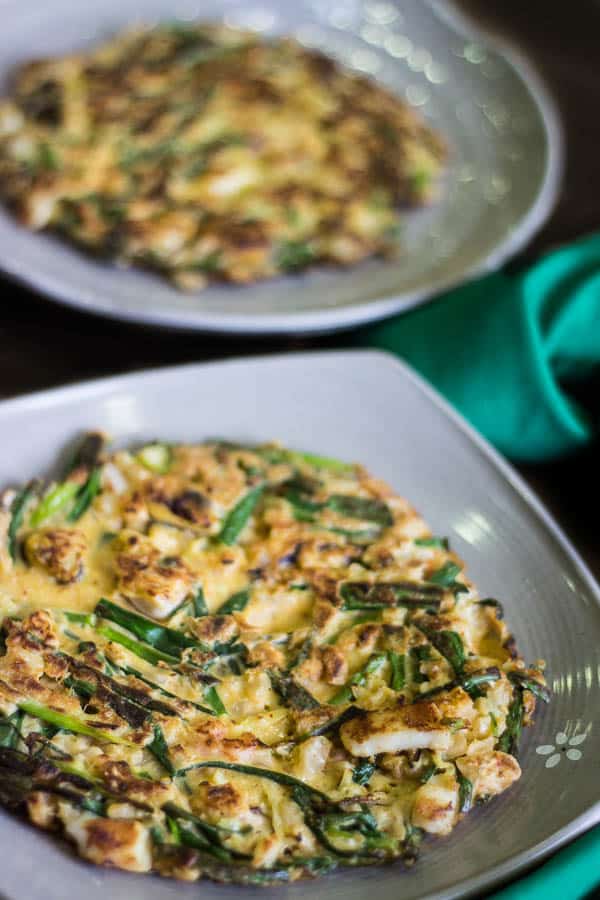
Crispy Korean Kimchi Seafood Pancakes
★ Did you make this recipe? Please leave a comment and a star rating below!
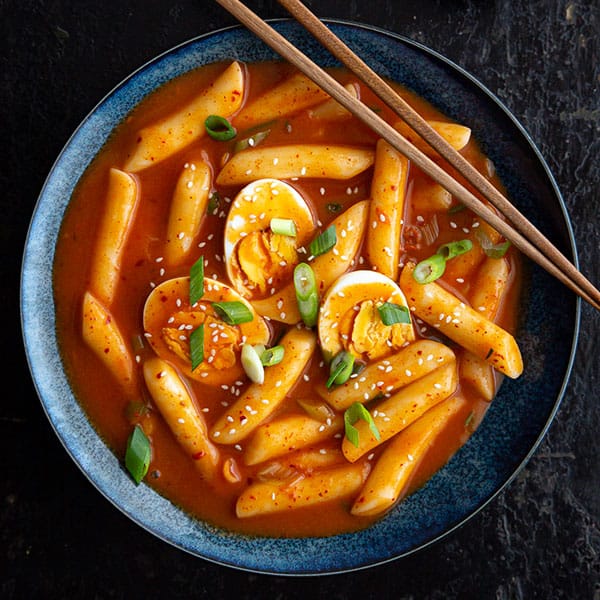
Tteokbokki Recipe – Korean Spicy Rice Cake Stir Fry
This fiery Korean Tteokbokki recipe features a quick and easy sauce base you can make in less than 10 minutes! We'll simmer chewy cakes in a spicy sauce of gochujang and dashi stock in this delicious and satisfying homemade street food recipe.
Prevent your screen from going dark
Prep Time: 10 minutes
Cook Time: 10 minutes
Total Time: 20 minutes
Course: Snack
Cuisine: Korean
Servings: 2
Calories: 326 kcal
Cost: $10
- 750 g water
- 1 ½ tsp dashi powder stock powder
- 2 tbsp Korean hot pepper paste / gochujang Korean chilli paste
- 1 tsp Korean hot pepper flakes / gochugaru
- 1 tsp raw sugar
- 1 tsp soy sauce
- 150 g Korean rice cakes round or flat, soaked overnight or prepared as below
- 1 spring onion / green onion some reserved as garnish
- 1 tsp sesame oil
-
Add water and dashi stock powder to a wok or large frypan and bring to the boil. Add in the gochujang paste, red chilli flakes, sugar and soy sauce and stir into a luscious, fragrant soup.
-
Pop in the rice cakes and spring onion and bring back to the boil, then simmer for around 10 minutes until the rice cakes have softened, stirring frequently so they don't stick to the bottom. You'll know it's done when the sauce becomes thick and glossy and the rice cakes are nicely chewy (go on, test one, you know you want to!). If the rice cakes aren't soft enough, add in a little more water and continue to cook until ready.
-
Just before serving, pour in the sesame oil and give it a good stir. Garnish with more spring onion, then serve piping hot and delicious!
- Tteok / Rice Cakes – You can use the long cylinder-shaped rice cakes known as garae-tteok, or flat rice cakes sliced diagonally. It's more common to use the cylinders, but the flat rice cakes will taste just as good. The best place to look for them is the fridge or freezer section of Korean convenience stores or Asian groceries.If frozen – soak them in boiling water for a few minutes before cooking to defrost. If dried – soak them for a minimum of 3 hours or overnight, or you can speed up the process by soaking in boiling water for 10-20 minutes before cooking.
- Gochujang – One of the key ingredients to the dish, find out more about it in our gochugang guide. Regular gochujang has more of a tomato / sweet taste than chilli heat, although you can buy an extra hot version if you prefer. We've found these at regular supermarkets, Asian groceries or online. Note that the level of heat can vary depending on the style or brand of gochujang that you buy. If you're unsure, start with a small amount and build it up from there. If you can't source gochujang, you can substitute (per tbsp) with 1 tbsp of red pepper flakes blended with 2 tsp of soy sauce and a pinch of sugar. The flavour won't be as complex, but it should get you through. P.S. If you have leftover gochujang, there's plenty of delicious ways to use it up!
- Gochugaru / Korean Red Pepper Flakes – Find it at Asian grocers and online, where it may also be labelled as hot pepper powder. These seem to have more flavour and less heat than regular chilli flakes. To substitute, use half the amount of cayenne pepper or regular chilli powder.
- Dashi Stock – this gives the unique umami flavour to the dish. There are two styles you can use as the base for this recipe: 1) Konbu dashi – less intense seaweed based flavour. OR 2) Katsuo dashi – intense anchovy kick. For the best flavour we recommend the stronger anchovy version. The smell is strong while cooking, but doesn't taste "fishy" in the final dish – instead it gives the dish a mouth-watering umami kick. Feel free to choose the right style for your tastes, or substitute with vegetable or chicken stock if you prefer.
- Make Rabokki – Add ramen noodles or instant noodles.
- Add Protein – Try it with chicken, thinly sliced pork, seafood (shrimp, squid, fish cakes), or spam sausages similar to Korean Army Stew.
- Add Cheese – Sprinkle with cheddar or top with cheese slices and bake or broil for a minute or two until the cheese is melted.
- Add Veggies – Add chopped cabbage, bok choy, broccolini, red bell pepper / capsicum or kimchi.
Nutrition Facts
Tteokbokki Recipe – Korean Spicy Rice Cake Stir Fry
Amount per Serving
% Daily Value*
* Percent Daily Values are based on a 2000 calorie diet.
We'd love it if you could give a star rating below ★★★★★ and show us your creations on Instagram! Snap a pic and tag @wandercooks / #Wandercooks
About Wandercooks
Hey there, we're Laura & Sarah! We've travelled the world to over 35 countries on a mission to bring you the tastiest recipes we've discovered along the way. Here's where the Wandercooks journey began…
how to cook korean rice cake
Source: https://www.wandercooks.com/korean-tteokbokki-spicy-rice-cake/
Posted by: mcnamaraformoush.blogspot.com
0 Response to "how to cook korean rice cake"
Post a Comment